Three Blocks From Set: The Print Shops Turning Micro-Budget Movies Into Something You Can Hold
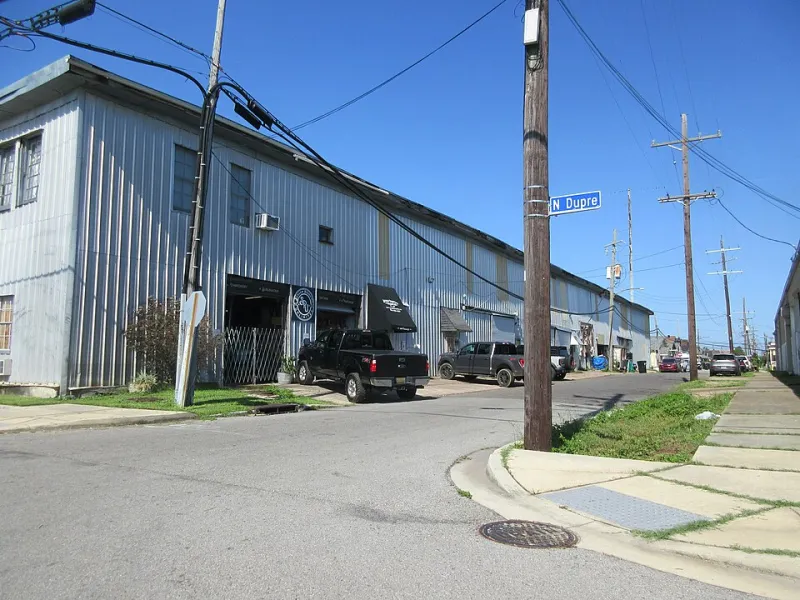
Photo: Infrogmation, CC BY-SA 4.0, via Wikimedia Commons
The poster for a $12,000 movie usually gets made after everything else. After the last hard drive is duplicated, after the festival fees are paid, after someone says, 'We should probably have something to put on a wall.' That order is backwards, and a small network of American print shops is quietly proving it.
Walk into a copy shop in Akron or a screen-printing garage in Dayton and you might find a stack of 18-by-24-inch posters for a feature that has not locked picture. The colors are slightly off. The paper is heavier than it needs to be. The type was hand-set by a designer who also does the film's social graphics. And the whole run cost less than a tank of gas because the shop took the job as a trade: color tests, paper stock, local pickup, and a line in the credits that reads 'poster printed by people who actually saw the movie.'
That is the world we are talking about. Not the glossy one-sheets that arrive from a distributor with a barcode and a QR code. The other one. The poster that gets stapled to a utility pole three blocks from where the movie was shot.
The proof is in the paper
In 2026, the feed is the default storefront. A film's first impression is a thumbnail, a trailer autoplay, a caption engineered for the algorithm. That is fine if you have a marketing budget. If you have $400 and a friend with a Riso printer, the physical poster becomes something else: a proof of life. A poster on a coffee shop bulletin board in a town of 30,000 does not compete with the feed. It sidesteps it. Someone sees it on the way to buy milk. They text a friend. The friend says, 'Oh, that's the guy who works at the hardware store.' That is not a campaign. It is a rumor, which is better.
The shops that make these posters are not trying to disrupt Hollywood. They are trying to make rent. A screen printer in Cleveland might charge $3 a print for a 50-run, if the filmmaker buys the paper and helps pull the squeegee. A copy shop in Tucson might do a digital run of 100 for $80 and throw in a color test for free because the owner used to shoot Super 8. These are not charities. They are small businesses with slack in the schedule and a soft spot for people who remind them of themselves.
Color tests and cash swaps
The trade economy is the point. A filmmaker with no cash can offer a credit, a case of beer, a free website, a day of PA work on the next shoot. The print shop gets a story and a customer who will come back. The film gets a poster that looks like it was made by a human being, because it was. One designer in Portland told us she prints micro-budget posters at cost because 'the color test is the fun part.' She runs three proofs on three paper stocks, texts photos to the director, and lets them pick. The director feels like a real filmmaker for an afternoon. The designer gets to make something that is not a wedding invitation.
This is not scalable. That is the feature, not the bug. A poster printed three blocks from set carries a local fingerprint: the paper is from the shop down the street, the ink smells like the garage, the typo in the credits is a typo the director will defend forever. When the film screens at a library or a bar or a borrowed church basement, the poster on the door is the same poster the neighbors saw at the laundromat. That is continuity. That is marketing you cannot buy from a platform.
Why a wall beats an impression
Algorithmic promotion is measured in impressions. A physical poster is measured in encounters. Someone has to walk past it, stop, read the title, maybe take a photo. The friction is the point. A poster that requires a body to move through space is a small act of resistance against the scroll. It also tells the truth about the film's scale. No one expects a $12,000 movie to have a billboard. They expect a poster with a crooked staple and a phone number for the director. That honesty is disarming. It makes strangers root for the movie.
The best micro-budget posters do not pretend to be studio one-sheets. They look like zines, flyers, gig posters. They use one image, one joke, one color. They list the cast like a band lineup. They put the screening date in Sharpie. They are designed to be taken home, not scrolled past. And because they are printed locally, they can be updated: a new date, a new venue, a new quote from a neighbor who liked it.
The credit economy
The credit line matters more than the cash. Print shops that work with indie filmmakers often get their name on the poster, in the program, on the website. That is not vanity. It is a portfolio. The next filmmaker sees 'printed by' and calls the same shop. The shop gets a pipeline. The filmmaker gets a collaborator. The town gets a small creative ecosystem that did not need a grant or a development office. It just needed someone with a press and someone with a movie.
If you are making a micro-budget film in 2026, the practical advice is simple. Find the shop before you need the poster. Ask about paper stock, color tests, and pickup. Offer a trade. Bring the designer a hard drive and a six-pack. Let them see the rough cut. The poster will be better if the person making it has watched the movie. And when the film screens, invite the shop. Put their name on the door. The first impression is printed, but the relationship is the campaign.