Talk Is the Ticket: The Filmmakers Booking Their Own Q&A Trail Across America
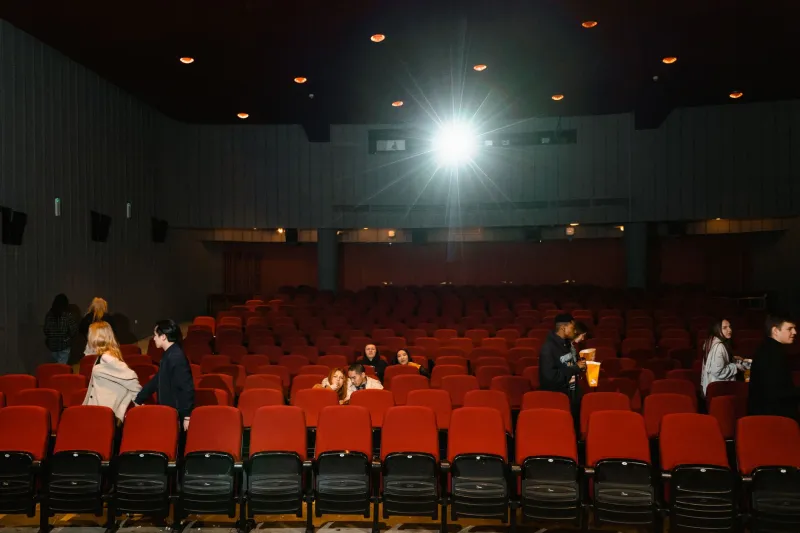
The screening room is a library meeting room with fluorescent lights, a pull-down screen, and forty folding chairs arranged in a loose semicircle. The film just ended. The credits rolled over a borrowed projector. Now the director is standing beside a card table with a stack of postcards and a QR code taped to a water pitcher, asking if anyone has a question.
That moment, repeated in hundreds of small rooms across the country, is becoming its own kind of release plan. Instead of waiting for a streamer to call or a distributor to build a campaign, filmmakers are booking their own Q&A tours: one night in a microcinema, one night in a church basement, one night in a community center that usually hosts zoning meetings. They drive, they crash on couches, they split the door with the venue, and they talk. A lot.
At Project Danus, we have been tracking this circuit less as a marketing trick and more as a production process that happens after the movie is finished. The Q&A is not a bonus feature anymore. For many filmmakers, it is the distribution deal.
The Route Is the Release Plan
The appeal is simple: control. A traditional release asks a filmmaker to hand over the movie and hope the campaign finds an audience. A Q&A tour asks the filmmaker to find the audience one room at a time. That means building a route around willing hosts, not around major markets. A library in a college town. A microcinema with forty seats and a loyal email list. A borrowed community room where the local film society has been waiting for an excuse to gather.
The tour is usually booked by the filmmaker, sometimes with a producer or a publicist working for a flat fee. The tools are unglamorous: a spreadsheet, a shared calendar, a folder of venue contacts, and a lot of follow-up emails. The goal is not a four-wall release in New York and Los Angeles. The goal is a string of nights where the room is full enough to cover gas and a motel, and where the conversation is good enough to send people home talking.
What a Room Costs
The economics vary wildly, which is part of the point. Some venues offer a flat fee. Some offer a split of ticket sales. Some pass a hat. Some ask the filmmaker to bring their own projector and sound system. A church basement might cost nothing but a thank-you note and a promise to clean up. A microcinema might take a percentage and promote the night to its own list. A library might have a strict ending time and a policy against selling merchandise in the lobby.
That scrappiness is not a flaw. It is the model. A filmmaker who can cover travel and lodging from a handful of screenings has effectively self-distributed a theatrical window, however small. The profit margin is thin, but the learning curve is steep in the best way. You find out which scenes land. You find out which poster gets a laugh. You find out which city has a film club hungry for something that is not a superhero sequel.
Why a Conversation Outperforms an Ad
A paid ad can put a movie in front of strangers. A Q&A can turn strangers into people who feel personally connected to the movie. That difference matters for independent film, where the audience is often built through word of mouth and direct contact rather than broad awareness.
The conversation also gives the filmmaker something an ad cannot: context. A director can explain why a scene was shot in a relative's garage. A lead actor can talk about the take that almost ruined the day. A composer can describe the temp track that got replaced at the last minute. Those stories do not fit neatly into a trailer, but they are exactly what makes a small movie feel worth seeking out. They turn a screening into an event, and an event into a memory.
The Question You Can't Script
The best part of the night is usually the part nobody planned. At one recent stop on a self-booked tour, a filmmaker fielded the usual questions about budget and cameras before an older audience member raised a hand and asked why the main character never called her mother. The director paused. The room went quiet. The answer turned into a ten-minute conversation about family, distance, and the things people leave unsaid. It was more revealing than any press kit.
That is the strange power of the Q&A circuit. It is not polished. It is not scalable. It is not the kind of thing a marketing department can package into a bullet point. But it is real, and audiences can feel the difference. A raw conversation can outdraw a paid ad because it gives people a reason to care beyond the poster.
The Afterparty Is the Feedback Loop
After the chairs are stacked and the last guest has left, the filmmaker usually has a notebook or a phone full of notes. Which joke killed? Which scene made people shift in their seats? Which question came up in three different cities? That information is gold for a filmmaker who is still figuring out how to talk about the movie, and it is gold for the next tour stop.
The Q&A tour is not a replacement for distribution. It is a way of building one from the ground up, one conversation at a time. It is slow, human, and stubbornly analog. And for a certain kind of independent filmmaker, that is exactly the point. The movie is finished. Now the work begins: driving to the next room, setting up the projector, and asking if anyone has a question.