Comment Before Cut: The Writers Drafting in Public, One Google Doc at a Time
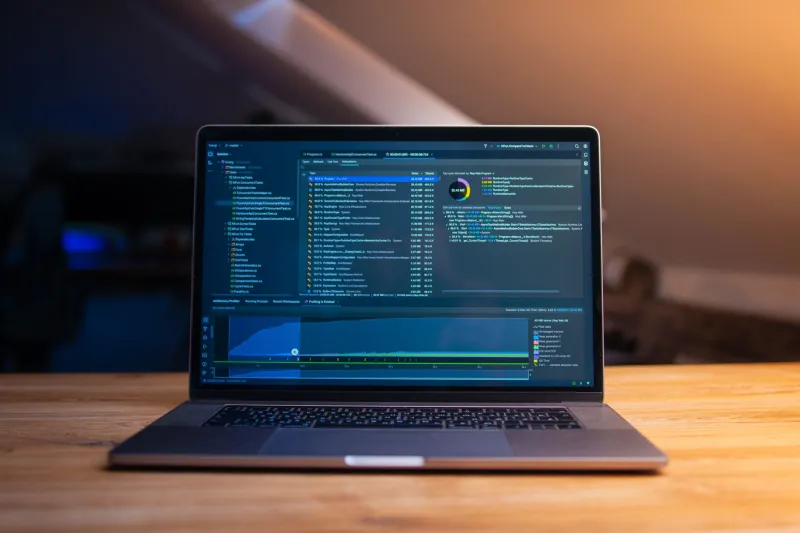
There's a version of screenwriting most people picture: a locked room, a corkboard, months of silence, then a polished PDF guarded like state secrets. Then there's what Maya Ortiz did last spring. She shared a link to a Google Doc titled Kettle Creek (DRAFT 3 — BE NICE) in a Discord server of about 400 people, and let them read her second act while she was still deciding whether the father lives.
"By the time I woke up the next morning, there were 60 comments in the margins," she told me over coffee in Albuquerque. "Some of them were brutal. One guy just wrote 'nope' next to the funeral scene. But he was right. The funeral was doing nothing."
Ortiz is part of a small but growing cohort of American writers who treat the draft not as a private wound but as a public event. They post pages as they go. They let readers vote on character fates, flag plot holes, and — occasionally — talk them out of decisions they'd regret. Think of it as a writers' room assembled from strangers across time zones.
The Margins Are the New Notes Session
The mechanics are unglamorous. A shared doc. Suggesting mode on. A running comment thread that can stretch to hundreds of entries by the time a draft stabilizes. Writers like Ortiz check in weekly, sometimes posting a single scene, sometimes a whole act, and let the peanut gallery respond in real time.
What's surprising is how much of it is useful. Sure, there's noise — the person who wants the movie to be a musical, the guy who "would have done it differently." But experienced public drafters develop filters fast. "You learn to read for patterns, not opinions," says Devon Hale, a playwright-turned-screenwriter in Portland who has posted three feature drafts publicly since 2021. "If one person hates your ending, that's a Tuesday. If four people independently say the ending feels rushed, that's a note."
It's the classic studio note process, minus the studio — and minus the executive whose notes are really about the marketing poster.
What Transparency Costs
Still, writing in public isn't free, and the cost isn't just the bruising comments. It's what happens inside the writer's head.
"The danger is you start writing for the comment section," Hale admits. "You kill a character because it'll get a reaction, not because the story needs it. I caught myself doing it in draft two. I was setting up moments for the chat. That's when I took two weeks off and wrote in a notebook like a Victorian ghost."
There's also the matter of protection. A public draft is, technically, a published work, which complicates registration and can spook producers. Writers in this space tend to work around it: register the script with the WGA West before posting, share excerpts rather than full pages, or keep the ending offline. "Nobody's stealing my movie about a haunted grain elevator," Ortiz laughs. "But I still don't post the last fifteen pages. Some things you keep."
And then there's the psychological weight of being witnessed mid-fail. Every half-formed scene, every placeholder line of dialogue marked with brackets, is out there for anyone to see. For writers raised on the mythology of the perfect first draft, it's a genuine retraining.
What It Builds
Here's the part that keeps these writers doing it anyway: an audience that exists before the movie does.
Hale's third public draft has a comment section full of people who've followed the story across three drafts and two years. When he finally shot a proof-of-concept short last fall, he didn't need to explain the project on a crowdfunding page from zero. The audience had already read the script. Some of them had argued with him about it. Forty-one of them backed the short within a week.
"That's the trade," he says. "I gave up the illusion of the genius-in-the-tower thing, and in exchange I've got four hundred people who care whether the sister makes it out of the third act. You can't buy that. Well, you can't buy it honestly."
For Ortiz, the payoff was simpler. The doc comments talked her out of a twist she now calls "the worst idea I've ever had, and I once wrote a vampire western." The film she's prepping now — shooting this summer outside Santa Fe on a budget she describes as "rent money plus" — is a better script because six hundred strangers read it while it was still wet.
An Open Kitchen, Not a Finished Meal
There's a long tradition in American art of making in the open — the gallery-as-garage, the backyard soundstage, the band rehearsing where the neighbors can hear. Public drafting is the writing version: less a finished product than an open kitchen, flour on the counter, customers welcome to peek at the dough.
Not every writer should do it. Some stories need darkness and silence, and some writers can't hear a single 'nope' without losing the thread for a month. But for a certain kind of maker — the ones building in the open, the ones this site has always been about — the margin comments aren't a distraction from the work. They're part of it.
Ortiz put it best as we wrapped up. "The old way, you write alone for two years and then find out nobody cares. This way, you find out in week two. Either way you learn. But one of them costs less of your life."
The doc is still open, by the way. Draft four drops Thursday.