Now Showing Nowhere: The Designers Selling You Tickets to Movies That Don't Exist
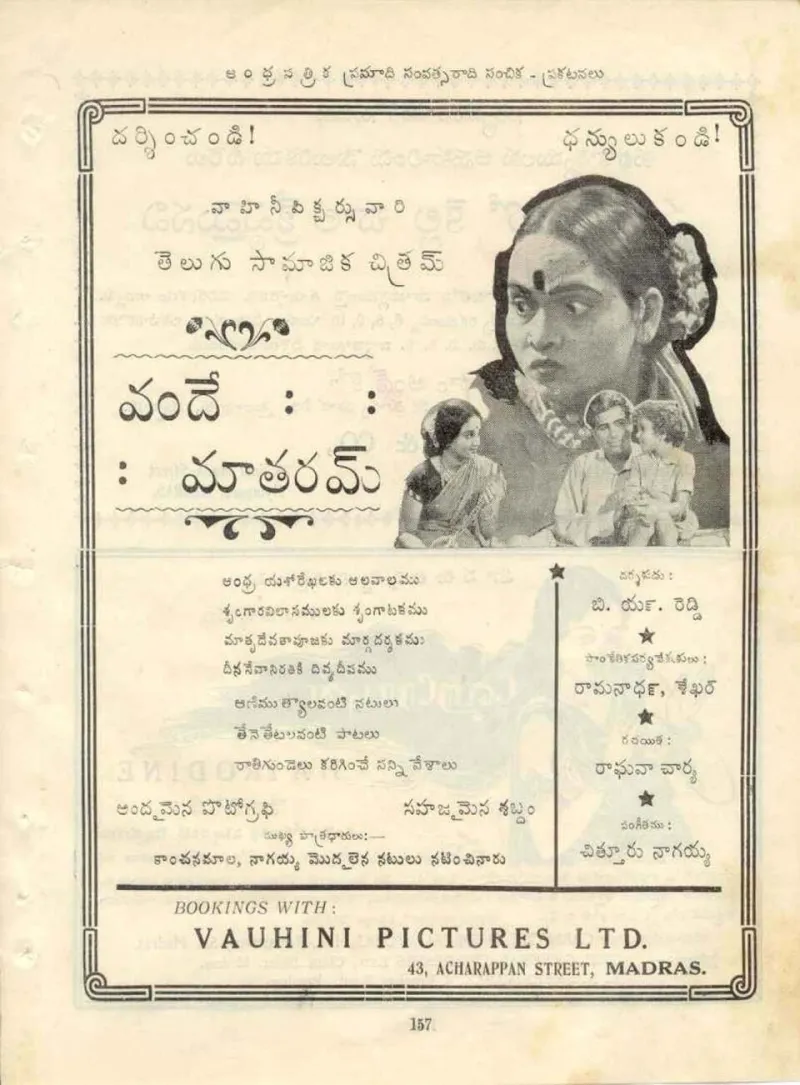
Photo: Published in AndhraPatrika Weekly Dated 22 March 1939, Public domain, via Wikimedia Commons
The poster on Marcus Idowu's wall looks like it belongs in a theater lobby on Sunset. Bold title treatment, a star's silhouette, that grainy 70s texture studios pay consultants good money to replicate. The film is called Meridian Line. It has a release date, a tagline, a fan-run Twitter account with 40,000 followers.
It also has no script, no cast, and no director. It was never made. It will never be made.
"People ask me when it's coming out," Idowu says, laughing from his apartment in Chicago where he works as a title designer by day. "I tell them the same thing I tell everyone: it's coming out exactly never. Somehow that makes them love it more."
The Campaign for Nothing
Idowu is part of a loose, largely online community of American graphic designers and editors building complete marketing apparatuses for imaginary films. The work runs the full studio gauntlet: one-sheets in multiple teaser variants, "leaked" set photos, fake tracking-board buzz, even physical merchandise that fans actually buy. Some artists cut full-length trailers from repurposed footage and stock, scoring them like A24 sizzle reels.
The scene lives in corners of the internet that feel like a parallel industry — Discord servers where designers trade font pairings like baseball cards, Instagram accounts that post one fictional poster a week, YouTube channels whose fake trailers rack up views that real indie marketing teams would kill for.
What makes it strange, and kind of beautiful, is that nobody's being scammed. Everyone's in on it. The audience knows the movie doesn't exist, and shows up anyway.
Three Artists, Three Phantom Films
We followed three creators through a month of building hype for nothing.
In Portland, Renee Castillo spent three weeks designing the poster campaign for The Hollow Coast, a fictional disaster epic set on the Oregon shoreline. She posted her process in the open — mood boards, rejected comps, the whole mess — because "hiding the work feels like the old way, and the old way is why nobody trusts movie ads anymore."
Her audience grew most during the failures. A rejected title treatment she nearly deleted became her most shared post.
In Atlanta, a video editor who goes by K. Marrow cut a two-and-a-half-minute trailer for a fictional heist film called Sunday Valet, splicing together licensed stock footage and public-domain archive. The comment section reads like a support group for a movie that never existed: "I need this movie to be real." "I would pay $18 to see this in IMAX." "Why did a fake trailer make me emotional?"
And in Brooklyn, a former ad agency art director named Tessa Nguyen runs what might be the most committed operation of the three: a fictional studio, complete with a logo animation, a slate of announced-but-nonexistent projects, and a mailing list of thousands. She sends "updates" about films that don't exist, written like press releases. People reply to them. Sincerely.
Grieving Stories That Were Never Told
Spend enough time in these comment sections and a pattern emerges — something adjacent to grief, but lighter. Fans describe these phantom films with the wistfulness usually reserved for cancelled shows or dead franchises.
There's a real argument that this is what the work is actually about. The modern blockbuster marketing machine is so polished, so focus-grouped and algorithm-fed, that the ads often outclass the movies. Strip away the film and what's left is the purest form of the hype: a promise with no product behind it. No runtime to disappoint. No third act to argue about.
"A poster is a wish," Nguyen tells us. "A real movie eventually crushes the wish. Mine never do."
There's something else underneath it, too. Most of these artists are working professionals — agency designers, freelance editors, studio title people — who spend their days executing other people's visions under NDA. The fake film is the one project where they hold all the cards. No client, no committee, no legal department sanding off the weird edges.
Castillo puts it bluntly: "I designed a whole summer's worth of movie ads for a studio last year. I couldn't tell you a single one of them. I could describe every version of The Hollow Coast from memory. Guess which one I put in my portfolio?"
The Open Set Nobody Built
For a site like ours — built on making things in public, no gatekeepers, no permission slips — this community hits close to home. These aren't hoaxers or grifters. They're craftspeople running the most transparent marketing campaigns in entertainment, for products that don't exist, and finding bigger audiences than plenty of real films do.
Some of them do eventually cross over. Castillo is developing an actual short film now, partly because strangers kept asking her to. Idowu has been approached by real producers who saw his fictional work and assumed he was teasing something legit. The line between the imaginary and the real, it turns out, is one email long.
Until then, the phantom slate keeps growing. Somewhere right now, a designer in Ohio is kerning a title treatment for a movie that will never roll credits. Somewhere else, someone is commenting "shut up and take my money" under a trailer stitched together from stock footage of a rainy highway.
The lights go down. The projector hums. The screen stays empty.
Honestly? Best movie of the year.