Seven Looks, Two Hundred Bucks: The Costume Wizards Outfitting Movies on a Wing and a Thrift Run
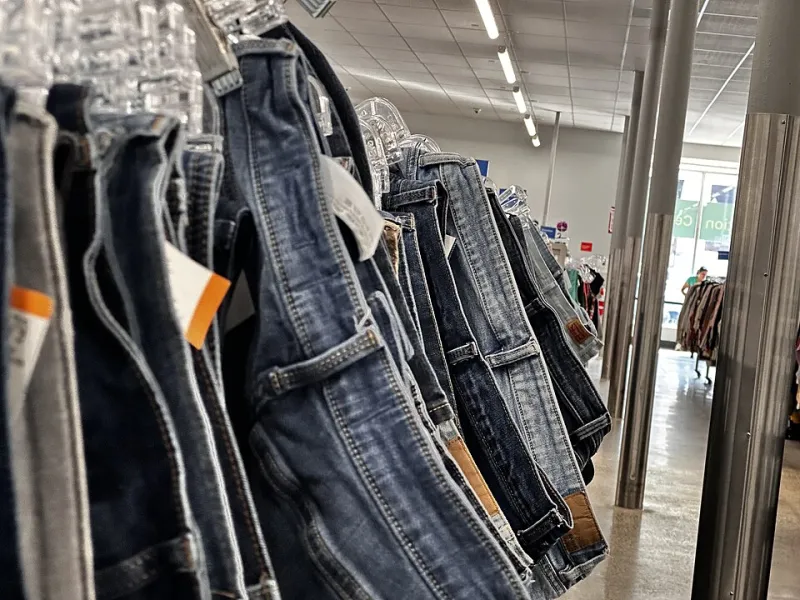
Photo: Magpieturtle, CC BY 4.0, via Wikimedia Commons
Every indie film has a moment when the money math stops making sense. For costume designers, that moment arrives early and stays late. A studio feature spends more on one hero jacket than most micro-budget films spend on their entire wardrobe. So what do you do when your costume budget couldn't cover a single pair of designer boots?
You get resourceful. We asked five working costume designers across the country to break down a real budget from a real film — line by line — and share the hacks that make two hundred dollars look like twenty grand under hot lights. Their answers read less like resumes and more like survival guides.
1. The Goodwill Strategist — Tanya Ruiz, Atlanta
Ruiz dresses about half the indie shoots in the Georgia orbit, and her method is surgical. "I don't shop Goodwill like a person. I shop it like a location scout." She maps every rack by era and fabric weight before a single script page is turned.
Her budget for the 2023 drama Fern Hollow totaled $240:
- Thrift haul (4 stores, 2 days): $118
- Alterations (one seamstress friend, paid in credit + cash): $60
- Dye, thread, safety pins: $22
- Shoe repair for the lead's boots: $40
The trick, she says, is buying for the camera, not the body. "Patterns read loud on screen. Solids go flat. I'll take a $4 loud shirt over a $40 boring one every time."
2. The Closet Lender — Marcus Dean, Chicago
Dean's apartment looks like a small costume house, because it functionally is one. "Sixty percent of my last feature came out of my own racks," he says. "I've been collecting since film school. My lease is technically a storage unit with a bed in it."
His line items for a recent noir short-turned-feature: $0 in purchases, $85 in dry cleaning, $40 in replacement buttons, and one deeply awkward conversation when an actor spilled red wine on a 1960s sport coat Dean's father wore to his own wedding.
"The closet method has one rule," he warns. "You lend, you log, you photograph everything on load-in day. Every time. No exceptions. I learned that the hard way twice."
3. The Swap Architect — Priya Natarajan, Portland
Natarajan's superpower isn't shopping — it's organizing. Before every production, she throws what she calls a costume potluck: crew, cast, friends, and friends-of-friends bring a bag of clothes they're done with and leave with someone else's.
"People love it. It's a party with a purpose. And suddenly your lead actress's 'worn-in diner waitress' uniform belonged to someone's actual aunt who waited tables in Eugene for eleven years. You can't buy that authenticity. It's already broken in."
Her entire wardrobe budget on Sunday Shift was $150, spent mostly on undergarments and socks — the things nobody donates used.
4. The Fabric Whisperer — Dee Wexler, Los Angeles
Wexler works the other end: instead of finding clothes, she builds looks from bolts of fabric bought at the LA Fashion District's discount rows. "S&P end-of-roll stuff, three bucks a yard. A period dress is just fabric plus a plan."
Her breakdown for a 1970s-set feature's five principal costumes: $90 in fabric, $35 in patterns (bought used on eBay), $50 in notions, and roughly ninety hours of her own labor, which she describes as "the line item nobody pays and everybody spends."
"The secret nobody tells you," she adds, "is that texture does the acting. Frayed hem, softened cotton, a stain that's been washed a hundred times — the audience reads all of it as story. New clothes read as costume. Old clothes read as character."
5. The Borrower — Sam Okafor, New Orleans
Okafor's productions run on favors, formalized. He keeps a spreadsheet of every shop, tailor, and vintage dealer in the city, annotated with who's said yes before. Local boutiques lend pieces in exchange for a costume credit; funeral homes, he discovered, are surprisingly generous with suit loans mid-week.
"New Orleans runs on relationships," he says. "You return everything clean, on time, with a thank-you card and an invite to the wrap party, and next production, three more people say yes. My budget line for wardrobe last film: $185. My line for thank-you cards and dry cleaning: $95. That second number is the real budget."
The Common Thread
Ask all five what separates a $200 wardrobe from a $200-looking one, and they converge on the same answer: it's never the money. It's specificity. A costume budget is really a research budget — time spent understanding who a character is, what they can afford, what they'd never wear.
"Studios buy looks," says Ruiz. "We build people. And honestly? That's the better job."
Every designer we spoke to said the same closing thing, unprompted: check the credits. The next time a micro-budget film's world feels real, some thrift-store strategist made it so — for the price of a nice pizza, tip included.