The Van Outside the Apartment: Seven Days Editing a Feature From a Parking Spot
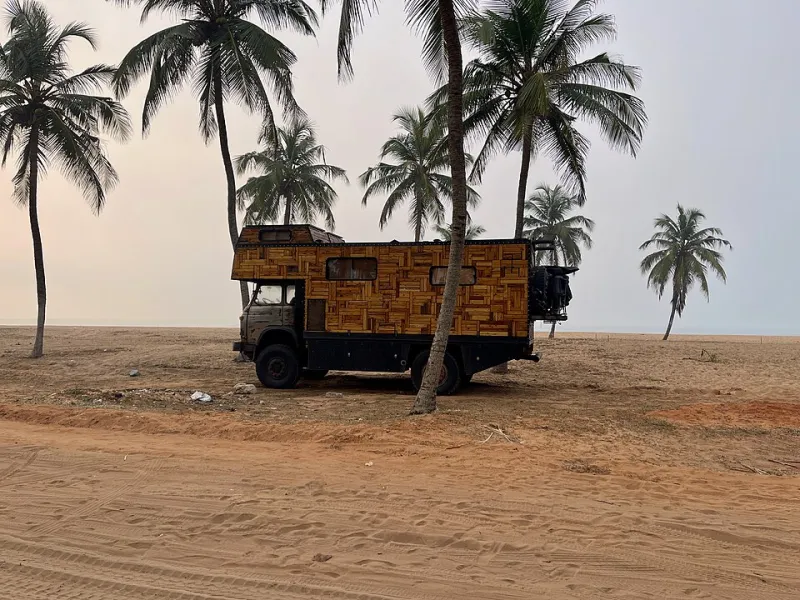
Photo: Fawaz.tairou, CC BY-SA 4.0, via Wikimedia Commons
Marisol Vega has edited three features from the same 2019 camper van. She bought it used for $11,000, gutted the back, installed a desk, a monitor, a power station, and a small fan that sounds like a distant lawnmower. In November 2026, she let me follow her for seven days while she cut a ninety-four-minute documentary from a parking spot outside the director's apartment in Austin, Texas.
Day One: The Battery Math
Marisol starts the day with a spreadsheet. It is not a creative spreadsheet. It is a power spreadsheet. The van has a 2,000-watt-hour power station, two 200-watt solar panels on the roof, and a DC-to-DC charger that pulls from the engine when she drives. The monitor pulls 45 watts. The laptop pulls 140. The fan pulls 15. The hotspot pulls 10. If the sun is good, she can work a full eight-hour day without running the engine. If the sun is bad, she can work five hours and then drive to a coffee shop to recharge.
Today the sun is good. She edits for six hours, breaks for lunch, edits for two more. The director, a man named Ellis, texts her at 4 p.m. to ask how it is going. She sends him a screenshot of the timeline. He sends back a thumbs-up. This is their entire communication system.
Day Two: Where the Hotspot Dies
The van is parked under a live oak. The shade is nice. The signal is not. Marisol has two hotspots from two different carriers because she learned this lesson on the last feature. The primary hotspot dies at 11 a.m. The backup dies at 2 p.m. She drives to a laundromat, parks near the window, and uploads a rough cut while her socks tumble dry.
This is the part of mobile editing that nobody puts in the brochure. The cloud is not a place. It is a series of parking spots with acceptable upload speeds. Marisol has a map on her phone with pins for every good upload location in town. The laundromat is a five. The library parking lot is a seven. The back corner of a grocery store lot is a nine, but only after 8 p.m.
Day Three: The Director Comes Downstairs
Ellis comes down from his apartment at 10 a.m. with two coffees and a notebook. He sits in the passenger seat. Marisol sits at the desk. They watch the first twenty minutes of the cut on the monitor. Ellis takes notes. Marisol makes changes in real time. This is the advantage of parking outside the director's apartment. The feedback loop is not a scheduled call. It is a knock on the van door.
By noon, they have restructured the opening. By 2 p.m., Ellis is back upstairs. Marisol eats a sandwich and keeps cutting. The van is quiet except for the fan and the click of the keyboard. It is not a glamorous studio. It is a room with a door that locks.
Day Four: A Rough Cut in a Rainstorm
The rain starts at 8 a.m. and does not stop. The solar panels are useless. Marisol runs the engine for forty minutes to charge the power station, then turns it off. The van rocks slightly in the wind. The fan fogs the window. She wipes it with a microfiber cloth and keeps working.
The rough cut is due at 6 p.m. She exports at 5:40. The export takes twelve minutes. The upload takes thirty-four. She misses the deadline by eight minutes. Ellis does not care. He watches it on his phone while walking his dog. He sends a text that says, 'Opening works. Act two is slow.' Marisol writes 'ACT TWO SLOW' on a sticky note and sticks it to the monitor.
Day Five: The Neighbor Problem
The van has been in the same spot for four days. A neighbor asks if it is abandoned. Marisol explains. The neighbor asks if she is making a movie. Marisol says yes. The neighbor asks if she can be in it. Marisol says she will ask the director. This is how location scouting works when your studio is a vehicle.
The actual problem is not the neighbor. It is the parking permit. Marisol has a two-hour limit on the street from 8 a.m. to 6 p.m. She moves the van every two hours. Sometimes she moves it to the other side of the street. Sometimes she moves it to a lot. The moving is annoying. The alternative, a rented office, costs $900 a month. The van costs $11,000 once and then nothing but gas and coffee.
Day Six: Rendering at the Laundromat
The final render is heavy. The laptop fan spins. The power station drops to 18 percent. Marisol drives to the laundromat, plugs in the power station, and lets the render run while she folds towels she brought from home. It takes ninety minutes. She watches the progress bar and answers emails. This is the least romantic part of the job. It is also the most honest.
Day Seven: Wrap on Wheels
On the last day, Ellis comes down with two slices of pie. They watch the final cut on the monitor. It is not perfect. It is done. Ellis says thank you. Marisol says she will send the file. He goes back upstairs. She closes the laptop, turns off the fan, and sits in the quiet for a minute.
The van is not a compromise. It is a room with a desk and a window and a door that locks. It is a studio that can move. For a certain kind of independent editor, that is not a limitation. It is the whole point.