The Town That Owns a Chair: Small Museums Are Quietly Becoming Hollywood's Attic
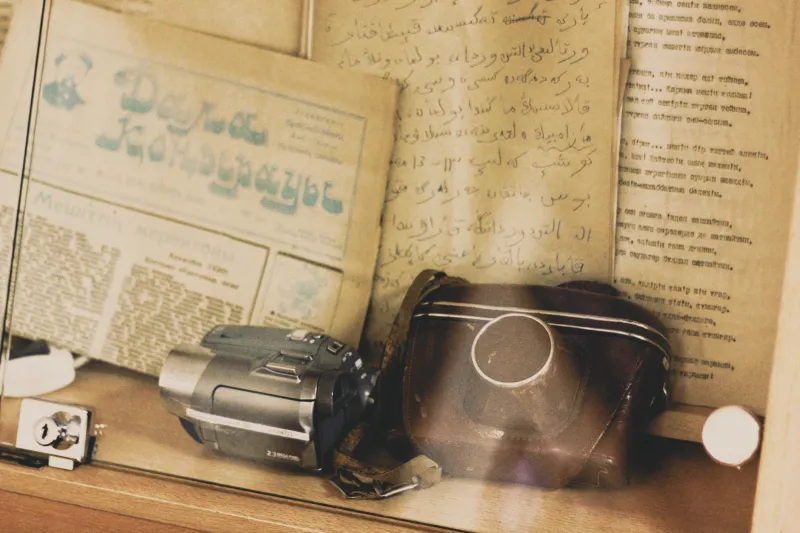
The chair sits under a glass case in a building that used to be a hardware store, in a town of about 2,400 people. The placard next to it reads: Set chair, featured in production filmed locally, 1997. No movie title. No character name. Just a chair, a year, and a town that decided it mattered.
Welcome to the stranger corners of American preservation, where movie memorabilia is quietly becoming local history — and where the people deciding what's worth saving are volunteers with laminated badge clips and strong opinions about acid-free tissue paper.
When the Film Crew Leaves, Somebody Keeps the Keys
Here's how it usually goes. A production rolls into town — maybe a mid-budget drama, maybe an episode of something, maybe a car commercial with delusions of grandeur. For three weeks, Main Street is a backlot. Locals get cast as background. The diner sells out of pie. Then the trucks leave, and the town is left with a hole in its calendar and, increasingly, a question: what do we do with the stuff?
Historically, the answer was nothing. Props went back to the production company, into warehouses, and eventually to auctions or the dumpster. But over the past decade, small museums have started asking for scraps. A letterhead. A signage piece. The fake storefront that made the bank look like a 1950s bank. And productions, often drowning in more material than they know what to do with, have started saying yes.
The result is a growing network of historical societies holding things that were never meant to last. And that's the part that fascinates us — because these objects were built to look good for six weeks on camera, not for sixty years in a display case.
The Archivist's Dilemma: Fiction or History?
We talked with a curator at a regional museum in the Midwest — she asked us not to name the institution, because she's currently negotiating for a set piece and doesn't want competition. Her collection includes costumes from a film that grossed less than its catering budget.
"People assume we'd only want something from a famous movie," she told us. "But fame isn't the point. The point is that this thing was here. It was in our diner, our street, our story. It's a document of a week when something happened in this town."
That framing — props as documents, not merchandise — is doing a lot of work right now. It's also creating genuine tension. Museums have finite storage and finite volunteer hours. Every square foot devoted to a screen-used lamp is a square foot not devoted to the town's actual archival record. Some old-guard members bristle at the whole enterprise. One board member we spoke with, half-joking, called it "collecting someone else's homework."
But the numbers don't lie. Exhibits featuring movie materials draw crowds. School groups show up. The donation box fills. In an era when small museums are fighting for survival, a recognizable prop is a hook — and hooks keep the lights on.
Provenance Problems and the $40 Costume
Of course, there's a catch, and it's a big one: proving anything is real is genuinely hard.
Unlike sports memorabilia or fine art, movie props rarely come with ironclad paperwork. A costume might arrive with a production assistant's email forwarded four times. A "screen-used" rifle might have been one of six identical ones, only two of which ever appeared on camera. Small museums rarely have the budget for authentication services, so they rely on relationships — a location manager who vouches, a producer who signs a letter.
The upside of this informality is price. Museums report acquiring items for nominal fees, or nothing at all, directly from productions that would rather see things honored than landfilled. One society we heard about picked up a full costume for the cost of shipping. The downside is that the historical record can get fuzzy fast, and a museum's credibility is its whole balance sheet.
The Chair Nobody Remembers, and Why It Still Counts
Back to that chair. We asked the town's historical society president whether it bothered her that almost nobody who visits knows what movie it's from.
"Not even a little," she said. "Half the things in here are farm tools nobody under sixty can identify either. The chair's in good company."
That might be the most honest argument for the whole movement. Museums have always saved objects whose original meaning faded — that's arguably what museums are for. A prop from an obscure film is just the newest category of artifact doing an old job: anchoring a memory, starting a conversation, giving a town a reason to point at a case and say, that was ours.
The films fade. The chair stays. And somewhere in America, a volunteer is currently deciding whether that's enough. Increasingly, the answer is yes.