Anyone Can Walk In: The Last Public Access Studios Betting on Strangers With Ideas
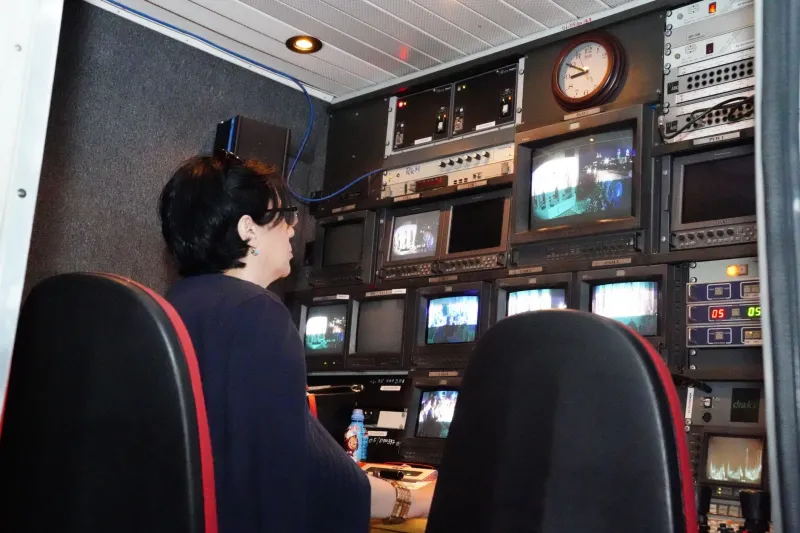
The sign on the door of Brookline Interactive Group in Massachusetts doesn't say much. No marquee, no hype. Just the hours, a bell, and an implicit deal that's been running since 1984: walk in with an idea, walk out with a broadcast.
That deal — anyone, any idea, your town's cable channel — is the oldest "made in the open" experiment in American media. Long before a director live-tweeted their rough cut or a collective streamed their edit sessions, public access television was putting ordinary people on air, unfiltered and unpaid. And quietly, station by station, it's the one that's disappearing.
The Deal That Built a Weird, Wonderful Wasteland
The mechanics are buried in the 1984 Cable Act. Cities negotiated "franchise fees" with cable providers, and in many towns, a slice of that money funded PEG channels — Public, Education, Government. The rules were radically simple: the station couldn't censor content, couldn't charge for airtime, and couldn't tell a resident their show was too strange to exist.
The result was television nobody else would ever make. Cooking shows hosted in home kitchens. Local wrestling promotions taped in armories. A man in Austin reading his poetry in a cowboy hat for twenty years straight. Midnight puppet shows with production values of a bedsheet and a prayer, and audiences of a dozen people who loved them completely.
It was also, almost accidentally, free film school. Before you could shoot something on a phone and post it in an afternoon, the access studio was the only place a kid with no money could learn three-point lighting, run a switcher, and blow out the audio on their own show — then do it better next week.
Where It's Still Alive
A few hundred PEG stations still operate across the country, sustained by franchise fees, grants, and stubbornness. Many are attached to schools or municipal buildings. Some, like the studios in Brookline, Cambridge, and Santa Monica, have modernized into media arts centers with podcast booths and editing bays alongside the old cable setup.
The through-line at every one we visited: the volunteers. Retirees who run cameras for the city council meetings and stay for the Saturday variety hour. High schoolers who came for the free equipment and never left. A retired AT&T technician in Ohio who's been the de facto engineer of his station for three decades and describes his job as "keeping the ghosts out of the rack."
They aren't nostalgia acts, exactly. They're infrastructure. The kind of people who believe a town should have a mirror, even if the reflection is a puppet show about municipal zoning.
The New Kids at the Old Station
Here's the twist nobody predicted: young filmmakers are coming back. Not for the cable signal — for the gear, the space, and the lack of gatekeeping.
A twenty-something animator we met in the Midwest puts it plainly: "I can't afford a soundstage. I can afford to be nice to the guy who runs the studio." She shoots her short films there, uses the cyclorama wall, borrows lights, and in exchange teaches a monthly camera basics class. Another crew uses their access station as a screening venue — thirty seats, free popcorn, an audience that shows up because the listing is in the local paper.
In an era where every platform algorithmically decides who sees your work, the access channel is almost transgressive: it just plays what you made. No metrics. No reach. Your neighbors either watched it or they didn't.
Running Out of Money, Running Out of Time
The threat isn't apathy — it's plumbing. Cable subscriptions keep dropping, and franchise fees drop with them. Some states have rerouted PEG funding into general budgets where it evaporates. Stations have closed not because nobody wanted them, but because the building's roof cost more than the annual budget.
The people running these studios aren't asking for sentimentality. They're asking to be seen as what they are: the cheapest, most open arts infrastructure America has ever built, still standing, still handing out cameras.
If you've got one in your town, walk in. Bring an idea. That was always the deal — and deals like this don't come around twice.