Six Months of Watching a Movie Age in Public: Inside the Release That Held Nothing Back
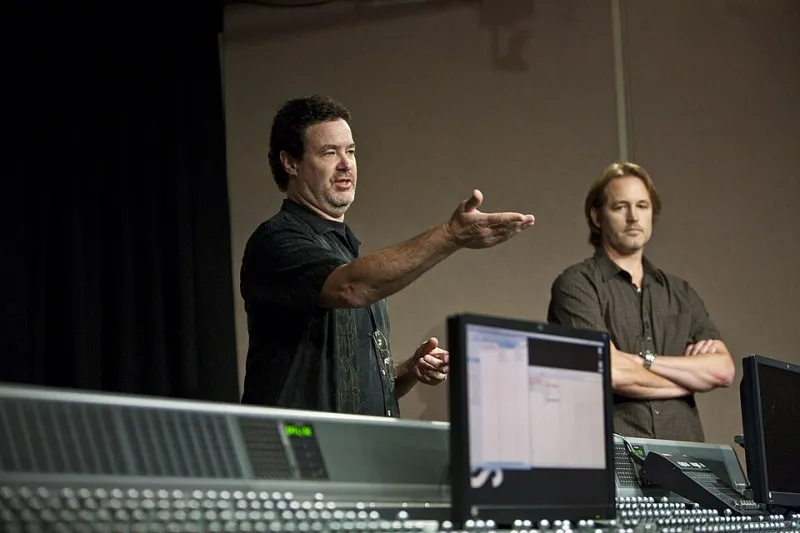
Photo: Vancouver Film School, CC BY 2.0, via Wikimedia Commons
There's a moment in every indie film's life when it exists only on a hard drive in someone's apartment. Usually, that's where it stays — private, protected, polished behind closed doors until the premiere. Mara Ellison did the opposite. In March, the Cleveland-based director uploaded her feature Hollow Creek Road to the internet in its ugliest form: a 94-minute first cut with temp music, missing scenes, and a title card that literally read 'VFX PENDING.'
She didn't stop there. Alongside the cut went her test-screening notes — including the ones that stung — and a colorist's log documenting every grade decision, scene by scene. Six months later, she premiered the finished film at the Cleveland International Film Festival. Between those two points, roughly 11,000 people watched the movie grow up in public.
The Cut That Wasn't Ready
"The first cut was bad," Ellison tells us over coffee in Ohio City, laughing in a way that suggests she's made peace with it. "Not 'misunderstood' bad. Genuinely bad. The second act dragged for twenty-three minutes. I knew that. The audience notes told me that in forty different ways."
Publishing the notes was, she says, the harder half of the decision. "Anyone can share their failures in retrospect. Sharing them in real time, while you're still bleeding? That's different." The notes — which she's since collected into a free PDF — include a viewer who wrote "I would leave if I weren't contractually obligated to be here" after a friend-of-a-friend test screening.
Her editor, Dev Okafor, admits he pushed back. "My instinct as an editor is protective. You don't show the bones. But Mara kept saying, 'People trust what they can see being made.' And honestly, she was right. The comments we got on the open cut were more useful than any festival feedback we've ever received."
Watching a Movie Do Its Homework
So who actually watches a rough cut of a film they've never heard of, made by a director they've never met? We talked to three of them.
Rosa Delgado, a nursing student in Tucson, found the cut through a film Twitter thread. "I kept going back," she says. "It was like a renovation show but for a movie. I watched the second act shrink. I watched a subplot I hated just... disappear. When I finally saw the finished film, I felt like I'd earned it. Like I'd been on the crew in some tiny way."
For others, the transparency cut both ways. "I think I can never unsee the first version," says Marcus Webb, a videographer in Portland who followed the project from the start. "The final cut is beautiful. But there's a scene in the third act that I first saw with temp music and bad lighting, and part of my brain still sees that version. The magic got a little... annotated."
Ellison doesn't dispute this. "That's the trade. Some people will have the spell broken. But a smaller group will care about the film more than they ever would have otherwise. I'd rather have five hundred people who feel like co-conspirators than five thousand who saw a thing once."
The Numbers, Such As They Are
The experiment wasn't a marketing play, but the numbers are worth noting. The finished film's festival screening sold out in four days — unusual for a no-name indie. Ellison attributes it directly to the open process: "People who watched the rough cut bought tickets. People who read the color logs bought tickets. The transparency wasn't content. It was an invitation."
The color grade logs, unexpectedly, became the most shared element. "I thought nobody would care," says colorist Jen Baptiste. "Then I got emails from film students asking about specific LUT choices. There's a whole generation that learned grading from YouTube tutorials, and they're starving to see real decision-making from a real production."
What She'd Do Differently
Ellison is already back in production, and yes, the new project is open too — with adjustments. She's holding back the ending this time. "I learned that the last twenty minutes need to belong to the audience cold. No context, no notes. They deserve to meet the ending as a stranger."
Her advice for directors tempted to try the same: "Don't do it to build an audience. Do it because you actually want witnesses. If you're doing it for engagement, you'll hate every comment. If you're doing it because making movies alone in the dark was making you miserable — then it might save you."
Hollow Creek Road screens at festivals through the fall. Every version of it, including the bad ones, remains online. "The first cut is part of the film's biography now," Ellison says. "You don't get to delete your awkward phase. Neither does your movie."